
Invited speakers COS2026
The content of this page is currently being uploaded
Prof. Zdravko Kravanja, University of Maribor, Slovenia |
|
| Circular Synthesis of Sustainable Systems through Simultaneous, Multi-Objective, and Global Optimization | |
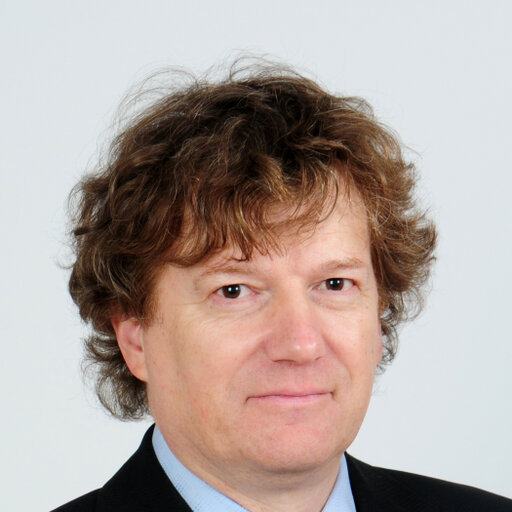 |
Zdravko Kravanja is a Professor and the Vice-Dean (Dean 2015-2023) at the Faculty of Chemistry and Chemical Engineering at the University of Maribor, Slovenia. He joined the university after several years in industry (1981-1985). He was Visiting Researcher (1988-89) and Visiting Professor at Carnegie Mellon University, US (1997), and Guest Professor at Danmarks Tekniske Universitet, Lyngby on several occasions (from 1998 on). He was awarded with Pannonia Award in 2015 and Slovenian state price - Zois award for excellence in science in 2017. He was President of the Slovenian Academic Association for Engineering and Natural Sciences (SATENA) (2010-2011). He has recently become an associate member of Slovenian Academy of Engineering. His research over the years has been devoted mainly to the development of algorithmic techniques, strategies, and computerised tools for sustainable Process Systems Engineering, including Heat and Water Integration. Together with Professor Grossmann, he has developed a unique mixed-integer process synthesizer shell called MIPSYN, now upgrading to MIPSYN-Global – an environment for developing global optimization techniques. Recently, his research has been oriented towards the synthesis of sustainable systems, e.g. renewable based biofuel supply networks, using multi-objective optimization and monetary based sustainability measurements, sustainability profit and sustainability net present value. He has (co)-authored more than 300 Scopus publications, two thirds being scientific papers. |
Dr. Sin Yong Teng, Maastricht University, Netherlands |
|
| Bridging Experiments and Digital Models to Advance Plastic Circularity | |
 |
Dr. Sin Yong Teng is the head of the multiscale systems and chemometrics for circularity (MSCC) team in Circular Plastics, Department of Circular Chemical Engineering, Faculty of Science and Engineering, Maastricht University, the Netherlands. His research bridges between chemical engineering/chemistry and data-driven modelling. His expertise spans different modelling techniques, such as chemometrics, machine learning, mathematical programming, process analysis, kinetic modelling, process optimisation, etc. These techniques are integratively applied towards both fundamental and semi-applied problems that address chemical knowledge and sustainability. He has received multiple top 1% awards from Web of Science and serves as a reviewer for many international journals such as Analytica Chimica Acta, Journal of Cleaner Production, Renewable Energy, Process Integration and Optimization, Artificial Intelligence Reviews, Chemometrics and Intelligent Laboratory Systems etc. He also serves as an editor for Energy Elsevier (IF=10.1), Discover Sustainability Nature Springer (IF=5.1), Canadian Journal of Chemical Engineering (IF=2.2) and other journals. |
Prof László Amand Palkovics, Széchenyi István University, Hungary |
|
|
Gene Editing as a Tool for Sustainability in Agriculture
|
|
 |
Prof. Dr. László Amand Palkovics was born in Budapest in 1960. He holds degrees in horticultural engineering and plant protection engineering and went on to earn a PhD and a habilitation. He was awarded the title of Doctor of the Hungarian Academy of Sciences in 2006 and the title of university professor in 2007. Since 2021, he has been working as a professor in the Department of Plant Sciences at the Faculty of Agricultural and Food Sciences of Széchenyi István University; he is a member of the University Doctoral Council and the University Scientific Council and serves as chair of the Committee on Research Ethics. He is the scientific director of the university’s Agricultural and Food Industry Research Center. He leads the HUN-REN-SZE Phatoplant Lab research group. His research areas include, among others, the diagnosis of plant viruses and viroids using traditional and molecular biological methods, the identification and characterization of new pathogens, viruses, bacteria, and fungi that have appeared in Hungary; research aimed at production safety, food safety, and quality assurance; the development of innovative and environmentally friendly plant protection technologies for sustainable agriculture; and research and development activities focused on solving plant protection problems arising from practical experience. |
Prof Taedong Lee, Korea Energy Foundation, South-Korea |
|
|
How Should Businesses Respond to the Climate Crisis? Climate strategies that reduce risk and create opportunity |
|
 |
TAEDONG LEE is the Chair and CEO of the Korea Energy Foundation. He was Underwood Distinguished Professor, Department of Political Science and International Relations, and Director of Environment, Energy, and Human Resource Development Center of Yonsei University, Seoul. He received his bachelor’s degree of Political Science, Yonsei University; Master’s degree of Environmental Studies and Urban Planning, Seoul National University; and Doctoral degree in Political Science from University of Washington, Seattle. He began his academic career as assistant professor at City University of Hong Kong from 2010 to 2013, and then moved to Yonsei University. Professor Lee has worked on sub-national environmental governance with perspectives of international relations and public policy. Lee (2015) published his monograph, “Global Cities and Climate Change: Translocal Relations of Environmental Governance (Routledge),” examining conditions entailed in cities’ participation in international climate change networks, collaboration patterns in a global network, and variations in city-level climate change policies with multilevel modeling, social network analysis and case studies. Professor Lee recently published monographs, Politics of Energy Transition (2021), Climate Change and Cities (2023), and Civic Politics and NGO (2023). His articles have appeared in top-tier journals (SSCI: Social Science Citation Index) including The Rise of International NGOs (Voluntas), Media Independence and Trust in NGOs (Nonprofit and Voluntary Sector Quarterly), Building Green (Review of Policy Research), Global Cities and Transnational Climate Change Networks (Global Environmental Politics), Policy Learning through C40 Cities Climate Network (Policy Sciences), Policy by Doing (Policy Studies Journal), Urban Energy Transition (Energy Policy) and other international and Korean peer-reviewed academic journals. Currently he is a principal investigator for a national R&D on climate change adaptation living labs (2023-2028, 6.6 billion KRW), and Project Y: Transformative Climate Change Research & Education (2024-2026, 400 million KRW). Professor Lee also work on book projects: translocal relations and companies and climate change. He can be reached at tdlee@yonsei.ac.kr (www.taedonglee.com). |
Prof Rodrigo Zeidan, NYU Shanghai, China |
|
| What we know, don't know, and can know about Sustainable Finance: Is ESG dead? Long live ESG | |
 |
Rodrigo Zeidan is a Professor of Practice at NYU Shanghai, as well as an Affiliated Professor at Copenhagen Business School and Fundação Dom Cabral. He is an internationally recognized expert in sustainable finance and financial management, with research published in leading journals such as Nature Sustainability, the Journal of Corporate Finance, the Journal of Environmental Management, the Journal of Business Ethics, and Harvard Business Review. Rodrigo has authored several books, including Economics of Global Business (MIT Press), The General Model of Working Capital, The Green Banking Transition Manual (Palgrave Macmillan), and The Future of the Chinese Economy (Routledge). |
Dr. Jean Pimentel, Széchenyi István University, Hungary |
|
| Designing for Uncertainty: A New Approach to End-of-Life Material Recovery | |
 |
Dr. Jean Pimentel is a Research Associate in the Department of Systems Science at Széchenyi István University, specializing in process systems engineering (PSE). He holds a PhD in Chemical Engineering from the Budapest University of Technology and Economics. His research focuses on the synthesis and optimization of production processes, with particular emphasis on improving the sustainability of industrial systems. Dr. Pimentel has applied optimization methods to a wide range of challenges, including process design, waste valorization, and circular economy systems. He is a co-author of the book P-graphs for Process Systems Engineering and has published more than 29 peer-reviewed publications indexed in Scopus, with an h-index of 10. His work combines mathematical modeling, combinatorial optimization, and systems-level thinking to address complex engineering challenges. Through his research, he aims to advance the development of sustainable, resilient, and economically viable production systems in response to growing environmental and regulatory demands. |